
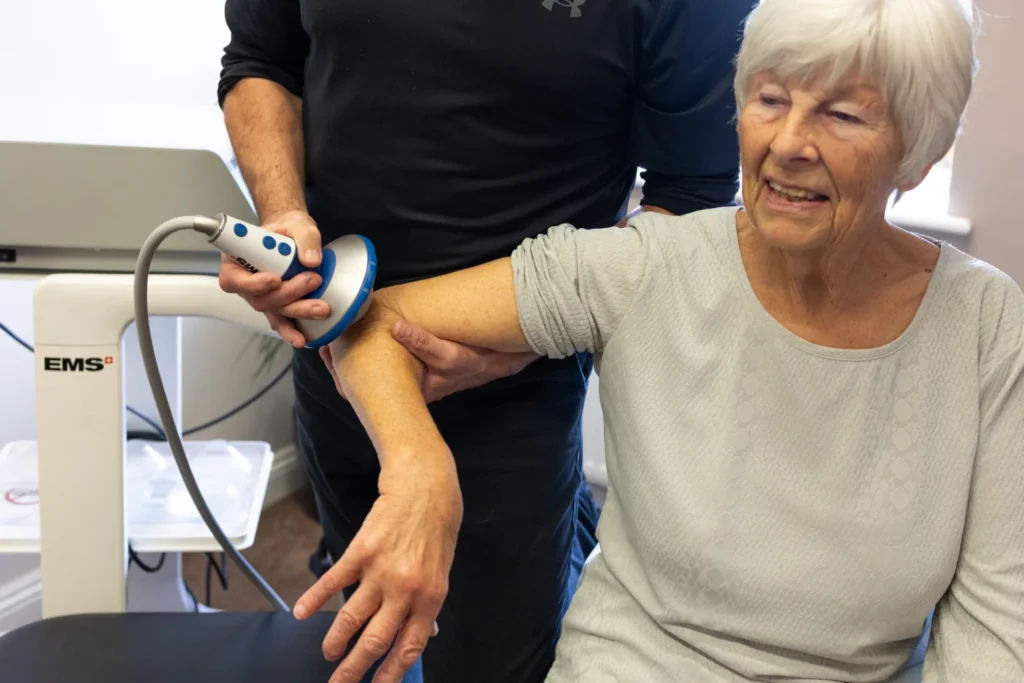
Reduce pain.
Restore strength.
Use your arm with confidence again.
Elbow pain can quickly interfere with everyday tasks, from lifting and gripping to typing or playing sport.
At Physio Fitness, we focus on identifying the cause of your elbow pain and creating a clear, personalised plan to reduce discomfort, restore strength, and help you return to normal use of your arm.
Whether your symptoms are linked to sport, work, or daily activity, the goal is long-term recovery.
What causes elbow pain?
Elbow pain is often related to overuse or repetitive strain, but it can also develop from injury or underlying joint issues.
Common causes include:
- Tendon irritation such as tennis elbow or golfer’s elbow
- Repetitive movements from work or sport
- Muscle overload or weakness
- Joint stiffness or restriction
- Previous injury or trauma
In many cases, the problem develops gradually rather than from a single event.
Symptoms of elbow pain
Elbow pain can present in several ways depending on the underlying condition.
You may experience:
- Pain on the inside or outside of the elbow
- Discomfort when gripping or lifting
- Weakness in the forearm or hand
- Stiffness or reduced movement
- Pain that worsens with repeated activity
Symptoms may become more noticeable during everyday tasks such as carrying, typing, or using tools.
When should you seek treatment?
It is worth seeking treatment if:
- Pain is not improving with rest
- Symptoms are affecting daily activity
- Strength or grip is reduced
- Pain is recurring or worsening
- You are unsure of the cause
Early treatment can help prevent the condition from becoming more persistent.
How we treat elbow pain at Physio Fitness
Accurate Assessment
Your first session focuses on identifying the structures involved and what is driving your symptoms.
We assess movement, strength, and how your elbow is being used in daily life.
Where needed, ultrasound scans can provide additional clarity.
Hands-On Treatment
Treatment may include:
- Physiotherapy to improve movement and reduce pain
- Sports massage to relieve muscle tension in the forearm
- Chiropractic care or osteopathy to support joint function
- Each treatment is tailored to your specific condition.
Restoring Strength and Function
Long-term improvement often involves:
- Strengthening the forearm and supporting muscles
- Improving load tolerance through the elbow
- Addressing movement patterns that contribute to strain
Functional rehab is often used to build strength and prevent recurrence.
Why choose Physio Fitness for elbow pain treatment in Bournemouth?
- Personalised Treatment Plans
Your care is tailored to your symptoms, your goals, and how your shoulder is functioning. - Multidisciplinary Expertise
Your treatment may involve physiotherapists, sports therapists, an osteopath, or a chiropractor, depending on what is most appropriate. - Clear, Practical Guidance
You will understand what is causing your pain and how to improve it. - Focus on Long-Term Results
The aim is not just to relieve pain, but to restore full, confident movement. - Experienced Clinical Leadership
Led by Consultant Physiotherapist Dave Mott, the clinic combines experience, expertise, and a results-driven approach.
Elbow pain treatment in Bournemouth, Dorset
You will find Physio Fitness located at:
Swallow Barn
Parley Green Lane
BH23 6BB
Our clinic is easily accessible from Bournemouth and across Dorset, with free on-site parking and a calm, private setting.
Your questions, answered.
What is tennis elbow?
Tennis elbow is a common condition involving irritation of the tendons on the outside of the elbow, often caused by repetitive use.
Can elbow pain go away on its own?
Some cases improve with rest, but many require targeted treatment to fully resolve.
Should I stop using my arm?
Complete rest is rarely helpful. Gradual, guided loading is usually more effective.
How long does recovery take?
Recovery depends on the severity and duration of symptoms, but most people improve with the right treatment plan.
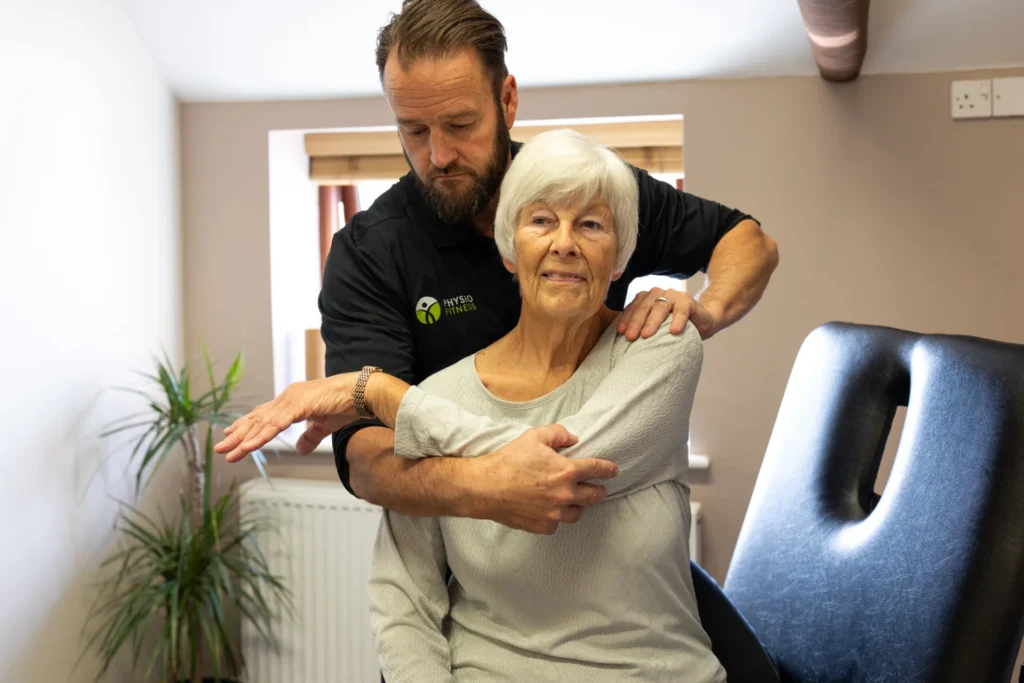
Get back to using your arm without pain
If elbow pain is affecting your strength, grip, or daily activity, the first step is understanding what is causing it.
With expert assessment and a structured plan, you can reduce pain, restore function, and return to normal activity with confidence.